

Settlement patterns
Three settlement patterns are found in this municipality namely: scattered, linear and nuclear settlements. Scattered Settlement is found in farmlands with dotted houses all over the place. Most of the quarters are in the form of linear settlements situated along the roadside. Nucleated settlement is found in the urban centre. Being the Regional, Divisional, and Sub-divisional Headquarters, administrative offices and residences for workers has influenced the settlement pattern to take this form.
Traditionally in the Bamenda II Council area, housing is made up of the typical mud blocks and corrugated iron sheets. The traditional housing patterns of the area have been greatly modified over the years. Thatched houses that were formally popular are no longer common in the communities, giving rise to modern and durable house construction pattern. Thus the traditional mud brick house characteristic of grassland people is not common again. The small difference lies with the Fulani’s who have their traditional round huts, which are also now getting gradually replaced.
Housing
Housing is the most basic of human need after food and clothing, and has profound impact on health, welfare and productivity of individuals. It is the most dominant urban land use component and constitutes a major problem in most of the urban centers in Cameroon. This is so, because urban centers do not possess adequate quantity and quality housing stock to keep pace with the growing population arising both from natural increase, migration from rural areas and smaller towns into the cities which are unprepared to receive them by providing employment opportunities. Housing in BIIC is characterized by slums, undesirable housing condition and shortages in housing supply as well as limited access by the urban poor. Consequently, overcrowding in homes and increasing pressure on the infrastructural facilities as well as rapidly deteriorating environment.
Housing is more than just a dwelling place owned or hired, but also connotes a combination of such requirement as adequate living space, environment, utilities, services, location and interaction with neighbours, accessibility to place of work, worship, play, safety and security of life and property, as well as good sanitation. Housing demand remains the main driving force towards urban sprawl and development of squatter settlement.
Patterns and Trends of Demand for Housing in Bamenda II Council
Effective demand refers to the number and quality of dwelling units which can be afforded by the population given the pattern of household income and expenditure, operating of housing finance and delivery system and policy of housing subsidies. Effective demand therefore entails the consideration of the variable in demand as well as the cost in unit in relation to level of income and willingness to pay for housing supply. Effective demand is therefore determined by the following:
a) New household formation;
b) Migration;
c) Number of housing units;
d) Household level of income;
e) Operation of housing finance and delivery system;
f) Policy in housing subsidies;
g) Willingness to pay.
There are no basic statistics for housing demand in Bamenda II Council; however, the demand for housing can be estimated using the UN approach to demand estimates. It is based on population estimate which assumes that for a population of 1000 persons 8-10 new units of housing will be required as indicated in the figure 3.2 below. Estimates of new units of housing were determined using the 2005 population census.
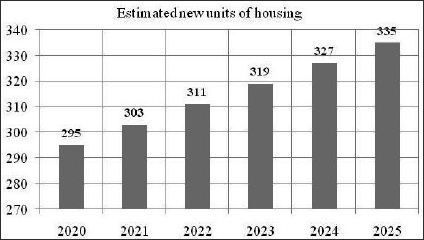
Estimated Housing Demand by Population Projection
The figure above shows the trend of housing demand but supply is difficult to estimate. However, housing supply in Bamenda and in Cameroon in general relies mostly in private production.
Access to Housing
The results from the diagnoses show that access to housing is a veritable cause for concern given that as a vital human basic need, decent housing is still a luxury to a good proportion of the population. The sampled households showed that (10.90%) are living in rented houses, whereas (85.26%) own the houses in which they live. This high percentage of persons living in their houses could be deceitful as majority are living in precarious houses that lack basic facilities (water, electricity etc).
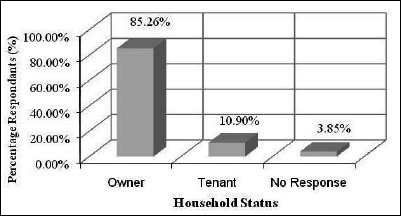
Status of House Occupancy
Patterns and Trends of Housing Supply
House supply refers to the amount and types of housing that are made available for consumption of given price within a given period of time. Housing supply differs from total housing stock in that supply is related to demand. When supply is equal to the demand there is equilibrium, and when the demand is more than supply a deficit set in while surplus occur when supply is more than demand. Housing supply is not limited to market forces strictly but to the housing need of society. Most supplies in Cameroon are not profit oriented especially those supplied by governments, families, non-governmental organizations and community base organizations.
There are two major housing sectors: - public and private sector. The public sector is government and its agencies for housing. This sector administered housing on the basis of objective need base on policies and goals of the government. Participants in this sector are government agencies.
The public sector comprises four other subsectors:
- Low-cost housing scheme
- Staff housing by various ministries and agencies
- Institutional housing
- Special housing-orphan homes, old people homes, special hospital, homes for institute, military, police, and navy housing scheme.
In the Bamanda II Council the contribution of public sector housing is insignificant. Housing supply in private sector is done by individuals as well as corporate bodies and organizations. They provide housing for sale, housing for rent and owner occupier houses. The owner occupier houses are sometimes termed popular sector and constitute a large percentage of housing in the free-market economy countries. They provide shelter for up to 70% of the population both in urban and rural areas. But this percentage represents the quantities aspects only. Qualitatively aspects of the popular sector cannot be said to represent the desired standard for housing.
The production of houses has the following characteristics:
- The patterns and trends for demand for housing are not adequately estimated
- The supply of houses is largely by private sectors particularly individuals either struggling to house themselves or make profit from their contributions;
- Access to land for housing especially for the poor is difficult due to the absences of an organized land market;
- Existing housing production processes and procedures are not effective, complicated, time consuming and costly as they depend on individual initiatives and abilities with little institutional positive support;
- The only organized housing credit facility is CFC which offers selected housing credits to a few who qualify. The rest depend on their limited personal means and informal financial assistances from family members, njangis, credit unions and high interest rates from commercial banks;
- Existing housing conditions are far from satisfactory as they are characterized by:
+ Random mixing of high, medium and low income housing,
+ Poorly constructed and not regularly maintained,
+ Fences which enclose houses are not controlled,
+ There is an evident shortage of houses for the poor and disadvantaged who are pushed to invade and occupy risky sites to house themselves,
+ Houses for the poor and disadvantaged are poorly provided with no basic utilities such as pipe borne water and electricity,
+ The random construction of high rise buildings which are largely unoccupied and underutilized,
+ The housing sector lacks coherent, consistent and realistic rules, regulations and standards rather than depend on the whims and caprices of those in charge.
Existing Categories of Housing:
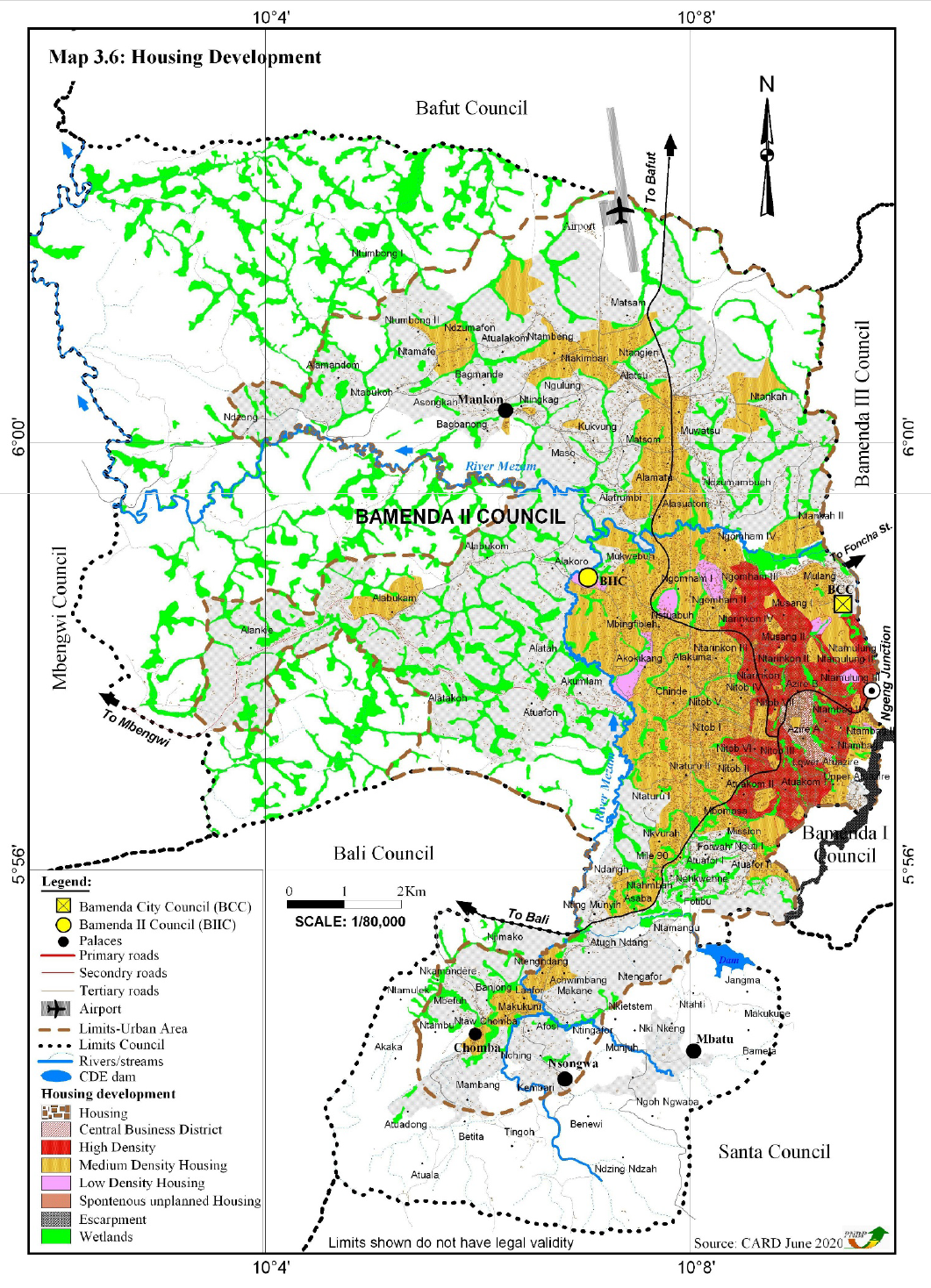
The residential areas in Bamenda II Council are not unique in its form. They are mixed-up with other uses in a haphazard manner. Four housing categories could be identified:
1. High density: These areas are associated with high rise buildings and have the tendency to accommodate more low income population. It is located close to activity areas of the city. This residential density is associated with the low income group.
2. Medium density: This area is vulnerable to become high density in future due densification.
3. Low density: The buildings and space pattern carries the features of low density which were considered desirable. Much of the lots are vacant and it is hope that infilling may change the pattern in favour of medium density.
4. Mixed residential density: area takes some portions of high density residential and commercial areas. These areas permit mixed commercial and residential activities and mixed residential and services.
From the analysis on the different classification on housing types as seen below it is dominated by low grade with plots or parcels sizes less than 400m2 representing 32.69% and 400-800m2 representing 32.05%. These categories of plot sizes are found within the central town.
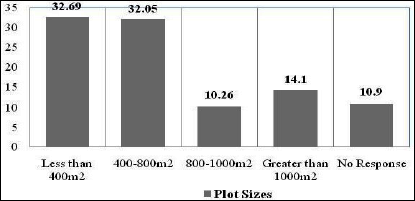
Approximate area of the plots owned by landlords
Classification of Housing Types:
Housing units within the Bamenda 2 Council can be classified in structural terms as:
1) Detached House: From our sample questionnaire, detached housing unit type, put together with official residences, represent (2.56%). The distinguishing characteristic of this type of housing is that it is planned and laid out as a single-family dwelling unit. It is equally characterized by low density, gardens, lawns and garages, entry halls and porches. This type of housing could be seen in Ngomgham, Akokikang and Mukwebu quarters.
2) Semi Detached House: The semi-detached type of housing units represented (9.62%) of the survey. This grade of housing is characterized by a planned layout, multiple family dwelling units, medium density housing, some gardens, lawns and garages.
3) Block of Flats: This housing type comprises of many dwelling units in one building, housing different households and on many vertical levels or floors represents (5.77%). They are found within the CBD and the peripheries of the CBD.
4) Bungalows: Bungalow housing type surveyed represents (12.82%). Bungalow is visibly identified by an unplanned environment, absence of streets, use of traditional building materials and methods with a trend towards modernization of the building materials and rudimentary construction methods. Poor sanitary conditions and dilapidated structures abound. This housing type is commonly found among the indigenous populations or earliest settlements. Although the majority of these low-grade housing units are found
within the early settlements, at the centre and other locations of the town, similar structures can also be seen on the outskirts.
5) Duplexes: A duplex is a house that is divided into two and inhabited by two separate families with separate entrances at the same level or one that is on two floors, with an inside stairway connecting the two levels which are used by the same household. This type of housing is quite visible within the planning area of this study and in their majority fall within the high income group of housing units.
6) Precarious Traditional Housing: This housing type represent (66.67%), which is precarious with regards to security and health of the occupants, is made up of old houses that were built using local natural materials such as sundried blocks for walls, left unplastered; though with zinc roofs but having the natural soil for floors. These houses are threatened by collapse due to age and deterioration of the materials used and the roofs leak profusely when it rains. Water and electricity are distant dreams, toilets non-existent and the people either use pits open to the sky or the bushes to discharge human waste.
The majority of housing units in this category are found in Ntambag (Old Town), Ntamulung, Lower Atu-azire (Metta Quarter), Azire “A and B”. The precarious housing type is fast disappearing as more people are now embracing modern improved housing types because of the durability of its materials, beauty and prestige associated with ownership of such a modern housing unit.
Producing and Financing Housing
Texts on real estate promotion and the profession of real estate agent were done in 1997 (Law N° 97/003 of 10th January, 1997 on real estate promotion and Law N° 2001/020 of 18th December, 2001 on organizing the profession of real estate agent). These two texts define low cost housing and fix its norms. According to Decision N° 009/E/2/MINDUH of 21st August, 2008, low cost housing is one where a part of the cost is charged to the state, a council or any other public institution.
Promotion of Local Construction Materials
A majority of the dwellings of the households in Bamenda II Council are built in nondurable materials. Yaoundé and Douala have 40% and 27% respectively, dwellings constructed of non-durable materials according to the 3rd GPHC 2005. The creation of the
Mission for the Promotion of Local Materials (MIPROMALO) in 1990 did not reverse the tendency to use bad quality materials and the precariousness of housing for poor households. In Bamenda, ABM, Kendely and Dreamland are not only involved in the production of low cost housing, but in the production of local building materials as well.

Local Material Production
Some of the material resources such as clay, sand, lateritic clays, lateritic gravel, quartz and lateritic hardpans, etc. constitute good local construction materials. A lot of these materials are found within the municipality specifically at Mbatu, Chomba and Ntambeng-Mankon. The Ntambeng quarries are explioted at industrial scales by ABM, Kendely Rock Quarry and Dreamland, while on the other hand all the sand pits in Mbatu Nsongwa and Chomba are artisinal. Local construction material sector shall attract much attention from public authorities for several reasons with the two most important being:
a) The exploitation of these materials shall generate income, create jobs and also stimulate local economic activities through the improvement of road infrastructure, schools, hospitals, energy and communication equipment,
b) Revenue that will be generated in the division and the council in the form of taxes and dues will improve upon the treasury account.
In order to improve the use of local materials in construction, it is necessary that the state and the decentralized bodies prioritize their use in public construction. Indeed, most building materials used by poor households for constructing their houses (e.g. earth blocks and wood) are considered to be temporary materials. Using these materials in their natural state with no improvement does not make them last long.
Production of Low Cost Housing
The programme of 10,000 public housing units and 50,000 parcels financed by the government, had very high standards of housing, making the cost prohibitive for poor people.
The institutions created by the state to improve access to urban land (MAETUR) and to make low cost housing available (SIC) recorded mitigated balances. The number of plots made available and the housing units realized are only a very weak proportion of the needs. SIC, for example, has achieved only 2,504 housing units since 1952.
There are three major housing sectors: - public, public private partnership and private sector housing supply:
1. Public Housing: The Government through Direct Construction Programmes - The Cameroon Real Estate Corporation Société Immobilière du Cameroun (SIC) established in 1952 under the technical supervision of the ministry in-charge of housing and urban development. It is the key operational institution in the implementation of government policy in terms of social housing. SIC main missions are to provide decent accommodations and to make them available to the public through commercialization by leasing, cash or installmental payments. The impact of the government direct construction programme is yet to be felt in Bamanda II Council; however, Bamanda I and Bamanda III Councils have benefited from the programme.
2. Public Private Partnership: Since 2006, Solidarity Actions of Support to Organisations Supporting Freedom, known by its French acronym ASSOAL, has been working with the National Network of Inhabitants of Cameroon (RNHC) to develop new ways to improve access to affordable housing and to advocate for their application. Housing co-operatives have been set up and credit is provided to such co-operatives to build affordable housing through a national revolving fund that is overseen by a board of directors, a technical secretariat and a committee responsible for monitoring and tracking the use and final destination of funds.
3. Private sector involvement: Decree N° 2008/2304/PM of 29th July, 2008 defines a set of fiscal reduction measures in favour of public housing. These benefit mainly the big real estate promoters, but not the poor people who build their houses themselves
through self-help housing processes. They provide shelter for up to 70% of the population both in urban and rural areas. But this percentage represents the quantitative aspects only. Qualitatively aspects of the popular sector cannot be said to represent the desired standard for housing.
FINANCING LOW COST HOUSING:
A. Public sector involvement
In Cameroon, the fundamental regulations on land, on financing and on promoting low cost housing are generally good. The main problem is the difficulty in applying them. Different actors, especially civil servants, who prepare most documents, place biases in the smooth functioning of professional associations, or in the procedures for evaluation of performance. An analysis of the public investment budget (PIB) reveals that the state finances the development projects of the urban sector. The Special Council Support Fund (FEICOM) and the Cameroon Real Estate Company (CFC), both state-controlled financial organisms, contribute to the financing of the activities of the urban sector, while granting subsidies and loans to the councils and urban communities. At the same time, the state subscribes to shares in the capital of the enterprises whose mission is the planning, the rehabilitation and the construction of urban infrastructure. Otherwise, the CFC grants some loans to individuals for the financing of their housing, as well as providing finances for real estate projects. Aurora Building Materials (ABM), NJN Homes are the two real estate companies in Bamenda II Council. AURORA got CFC funding worth hundred of millions FCFA for planning and opening up of roads within the layout. 70 to 80% of the housing is to be low cost, while the other strata will take up the rest. NJN Homes created in 2011 aims at
providing quality decent and affordable homes to the population. The classical banks make only marginal contributions to the financing of housing. All these state institutional mechanisms to finance housing in Cameroon, cover only a small part of the demand.
B. Private sector involvement
At the end of 2009, 23 private operators had been approved as real estate promotion agents. Today, those left in the sector can be counted on the fingers of one's hand. Private production is limited to some programmes and do not exceed 100 houses by programme. Its importance is marginal in relation to the demand in lodging valued in urban environments at 70 000 units per annum; the global need for housing in Cameroonian cities is estimated at 1,5 million units.
C. Micro-finance sector
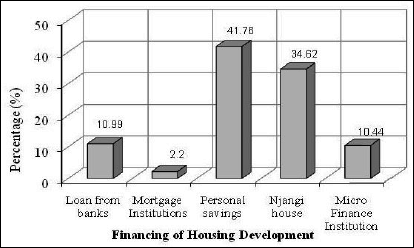
New products from the micro-finance sector, through the small credits offered, permit the financing and improvements of the housing of the population, especially the urban poor. Of the informal financial sources for housing improvement, household savings and njangis constitute more than (76.38%), while the formal financial sources (bank loans, mortgages, micro-finance loans) constitute only about (13.19%) of the finance for the housing. It is worth noting, though, that for household expenditures, housing
improvements are ranked higher than rents, coming only after education, food and health, in that order.
The financing of housing development is entirely through personal savings derived from the sale of farm produce, trading and for the most part from salaries of civil servants who have served or are still serving in the area. Figure 4.6 shows that (76.38%) of
households’ finance housing projects from personal savings plus Njangi houses. This is closely followed by bank loans and mortgage institutions (13.19%) as a source of financing for housing projects.
D) Public Private Partnership
The first public private partneship in financing low cost housing was carried out specifically within the Bamenda II Council by BCC in the construction of purely commercial stalls around the municipal stadium, Hospital Round About, and BICEC. This can hardly benefit
the poor due to procedural and cost implications.
Evaluation of Low Cost Housing:
Low cost housing is in theory destined for low income households. Unfortunately, most low cost housing programmes are not open to the poor households. The transfer price of public housing integrates all costs, notably: the price of the land and relevant expenses, the expenses related to equipping and planning of the land, honoraria for studies and controls, construction costs, miscellaneous charges for management and marketing, the financial overheads. The standards of public housing, as defined by the law, are very high and do not permit poor households to afford them. The 30 million FCFA costs for a T3 apartment (3 rooms) as offered by the elitist SIC, for example, are clearly not what the poor can afford. Without subsidy, households with low or medium incomes will not be able to support these costs.
It is important that the state reviews the policy of low cost housing, especially the norms of low cost housing. The conditions of access to aid for the eligible households remain to be defined. Clearly, a different mechanism has to be devised to provide housing for the urban poor in Cameroon.
Map of Housing Development
Constraints to Housing Supply
1. Limited Finance: Housing is a capital intensive venture and should be from long term sources at low capital cost. This is not available in Cameroon; attempt made through establishment of housing fund was characterized by crisis and poor management.
Primary mortgage institution contribution is insignificant because their fund sources are short term. Commercial and merchants’ banks refused to grant loan as mortgage lending. Also various insurance companies that control large stock of pension and other security fund do not contribute to housing provision. With this limited finance, couple with high cost of borrowing made housing loans unaffordable to most people.
2. Poor Accessibility to land: The Land tenure system in Cameroon, practically cannot guarantee easy access to land. Rather many informal processes of accessibility prevail – by buying from land owners or speculators.
3. The land delivery, land alienation and the deed registry procedures are highly centralised and cumbersome. There is still lack of a systematic approach to the identification, demarcation and formal registration of land parcels.
4. Land administration: There has also been an absence of clearly defined institutional hierarchy for land administration which has resulted in multiple land allocations which in turn leads to complicated land disputes. The Land consultative board remains ineffective. Most of the urban residents live in poor conditions in unplanned settlements, and have no security of tenure.
Well being of Residents
Housing means more than a physical unit of walls enclosing a space and having a roof to keep owners out of rain, cold or something else. It is that unit, services that go with it and a whole gamut of relationships. It is always seen as part of a larger ensemble or settlement: a block, sub-quarter, quarter, a village, a town, or even a city. It was within this context that structured questionnaires
were administered in the quarters to investigate certain indicators of wellbeing of the residents.
1) Sources of Income of Households: The results show the low monthly income of residents that cumulatively 42.9% households heads earn less than 49,000FCFA monthy.
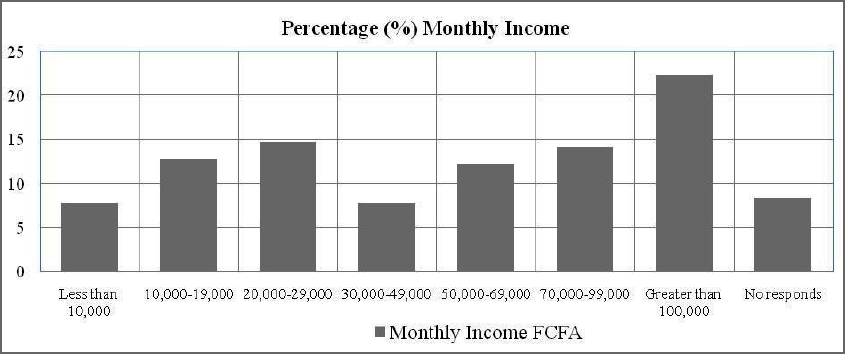
Monthly income of households heads
The household surveys revealed also that 28.85% were civil servants; 25.64% are businessmen, 35.89% are farmers and 3.20% from other occupations. The results show that the residents of Bamenda II Council are not over dependent on salaries and wages.
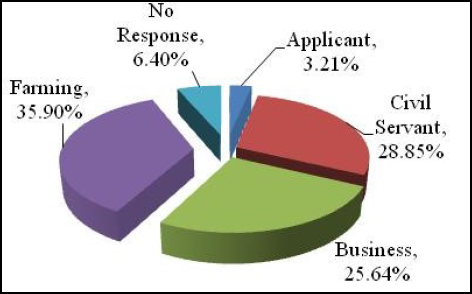
Sources of Incomes of Households
2) Statute of Occupation: The majority of landlords without land title represent (54.48%), while those in possession of a certificate of sale or agreement represent (33.97%), and the residents who reside on ancestral land from birth represent (35.26%). Lands with neither land title nor any document represent 53.2%, meaning that a majority of households are not able to justify the
occupation of their land.
As there is no land market, traditional land transactions and land brokers are poorly organized, hence it becomes difficult to create and standardize land acquisition and transfer procedures. This has resulted in homes being built on restricted area without urban vision. Moreover, some households are fully aware of their irregular status (lack of regulatory documents and illegal occupation of reserved areas: wetlands, easements, etc.). The consequences are enormous.
3) Age of Buildings: Construction of new houses has been on a steady increase. Between 1990-2018, (31.41%) of houses were constructed as compared to 20.51% houses constructed between 1980-1990. Given the trend of housing development for the next decade 2020-2030, it will be fair to conclude that it is likely to be high. The percentage of ‘No response, 8.97% is an indication
either of the commercial nature of the housing stock (tenants cannot provide the needed information) or the changeover of the ownership of the houses (new owners are not in possession of the building plans).
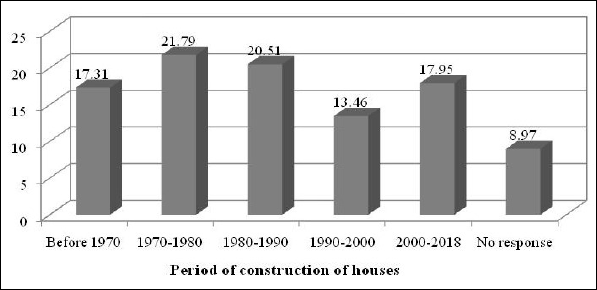
Period of Construction of Houses
4) Materials used for the Construction of Houses: For the Bamenda II Council to rise up to the demand for decent housing, determined efforts must be made by the administration to enforce the rules of good housing construction in terms of the respect of land-use prescriptions, layouts, construction regulations, use of appropriate building materials and construction techniques, uphold and improve the already existing legal transactions in landed property. The existing housing stock has been realized in the majority of cases without the due respect to either relevant Town Planning Rules and Regulations, or the use of building plans produced by competent professionals in the domain, application of the appropriate construction techniques/methods and materials necessary for the realization of quality housing.
5) Situation of Toilets: The survey of housing units shows that out of 390 households studied, 220 use pit latrines, representing (56.41%); while (42.56%) use water system, and 1.03% use the bush for their toilet needs as seen below:
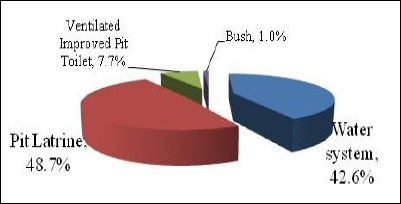
Situation of Toilets
These results are disturbing considering:
- The high water table within some areas of the council;
- The depths of the pit toilets vis-à-vis the numerous wells used by the population as source of drinking water.
6) Water Supply: The population in both (urban and rural areas) get water from four basic sources, namely: CAMWATER, community water supply schemes, boreholes/wells and spring sources. The surveys showed that 76.92% use water from wells and community water schemes, while 19.20% obtain potable water from CAMWATER, with 2.60% from spring streams/sources.
Some of the CAMWATER stand taps within the urban area were privatized a long time ago, whereas some are not functional. The results from the sampled resident population showed that 37.19% travel between 100 to 500m to fetch water.
The high rate of water borne diseases (typhoid 38.5%, cholera 14.10%, diarrhea and dysentery 18.00%) as affirmed by the respondents could be linked to the inadequate provision of potable water in the municipality.
7) Energy Supply: Out of the number of households surveyed, 50.6% affirms the regularity of energy, whereas 5.5% of the respondents do not have electricity in their houses. Regarding black-outs more than (50.64%) experience frequent electricity cuts every day. Those without electricity are probably those staying in neighborhoods or at the outskirts of the town.
The dominant source of energy used for cooking is the combination of gas-firewood-kerosene follow with (42.95%), while 50.64% of the households use fuel-wood for cooking; a low percentage (4.49%) use gas. Causes attributed to low connection or residents to ENEO grid are difficult and expensive bureaucratic procedures, high charges etc. as seen below:
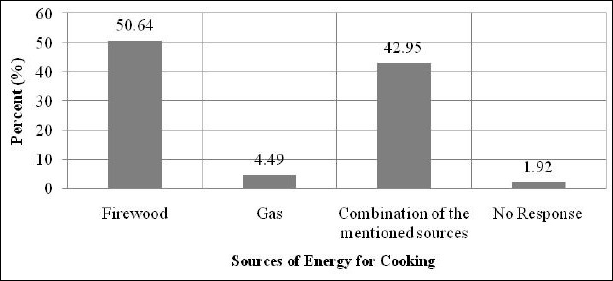
Sources of Energy for Cooking
Land Use Pattern
Land use patterns are a function of interrelationships between land use for economic, social and public interest determinants. Land use pattern within the urban area is not just as a result of the influence of one single determinant but that of interactions between all other determinants. Public decision on use of land may result in purely motivated economic changes in land use pattern. Public
interest and socially oriented values may have a cumulative effect of modifying the actions and ultimately the land use pattern.
As urbanization is largely an economic phenomenon, internal organization of urban areas turn to reflect economic forces which facilitate the functioning of the economic subsystem involved. A rational pattern of land use develops within the urban area which mirrors the differing requirements of the various economic activities and classes of residences. As the profit motive conditions the use of urban land a variety of behaviour patterns in the real property market tends to produce, in aggregate, economically motivated land use patterns. Usually these purely economic actions receive intervention by government based on public interest and social interest.
In Bamanda II Council area, large and small specialized activities have segregated themselves in their optimum conditions. This phenomenon is common in the central business district, district centre, and sub-district centre where commercial activities dominate. Close to these commercial areas are high density low grade residential areas; followed by medium grade residential areas. Beyond this point are mix residential areas of low, medium and high income households living close to one another and their choice of location is the availability and cheap land value.
Apart from commercial activities that are located where they enjoy the greatest relative advantages, other land uses do not follow suite; thus land is not used for its highest and best use. The spatial differentiation of land uses increases with increasing size of area without reflecting specialization of activities, thus creating a complex and chaotic situation despite the existence of the Master Plan and Land Use Plans.
PATTERN OF LAND OWNERSHIP:
Pattern of Land Ownership refers to the classification, occupation and the management of land. The existing pattern of land ownership within the Bamenda II Council is considerably influenced by the following categories of land tenures in Cameroon: -
A) Public Lands:
These are lands that are comprised of all real property that by nature or by purpose are allocated for the general use. Public land is liable to private appropriation. In principle, they are owned by the state on behalf of the public. Most of the public lands are often invaded and occupied by the population especially the poor non-natives who do not have access to regular building plots. Public land is classified into two categories:
a. Natural public lands are comprised of coastlands, waterways, sub-soil and air space.
b. Artificial public land: they include motorways, highways, public monuments, cemeteries, museums and traditional chiefdoms.
B) National Land:
National land covers the largest parts of the municipality. National lands are usually occupied by indigenes who have customary ownership rights and non-natives, who informally acquire them from the natives. They are occupied and used or not being used without titles. National lands are found all over the municipality.
National lands are expected to be administered by the government in such a way as to ensure rational use and optimum development. The government may classify portions of national land under the public property of the state or incorporate such lands in the private property of the state or in that of other public bodies for purposes of economic, public and social utility.
National lands are being classified into two categories:
1. National lands of the first category: these are lands that are occupied by houses, farms, plantations as well of grazing lands manifesting human presence and development before August 5th 1974. This category of land can be obtained through direct registration.
2. National lands of the second category are those lands that are free from any effective occupation as from the 5th of August 1974. This category of lands can be acquired by grants, through an application for concessions and final concessions.
C) Private lands:
Private lands are all registered lands. They are parcels of land over which the government has given freehold titles to individuals. They are subdivided into three categories namely: State private lands, Individual private lands and Corporate or community private lands.
# State Private Lands: Private Lands of the State include the following:
a) Personal and real property acquired by the state;
b) Lands which support buildings, structures and installations established and maintained by the government;
c) Real property developed upon by the state by virtue of:
- Being struck off the list of public property of the state;
- Expropriations for reasons of public interest;
- Grants of urban and rural lands which are forfeited by confiscation.
It is important to note that most if not all of private lands of the state are not titled.
# Individual Private Lands: These are lands on which land titles have been issued to individuals or corporate bodies. This is the only official document which constitute real property right. Individual private land can be acquired by the following: -
- Application for occupied and used national land as first category of national lands;
- Final concession on national land;
- Retrocession;
- Land subdivision
- Assignment (transfer).
# Corporate Private Lands: These are lands that are set aside by communities, organizations or corporations for community purposes. They are usually national lands with no titles. Community lands offer opportunities for attracting the location of various public facilities and sharing the land to needy individuals.
They can be acquired through grants and are meant for development projects managed by the population. Most of these community lands are not titled. Nobody can claim ownership of a piece of land without a land title. Only land owners with titles are usually compensated in case of expropriation for public utility. One can only obtain a loan from a bank with a legal land title.
MODE OF LAND ACQUISITION IN BAMENDA II COUNCIL
There are no land markets in Bamenda II Council. As elsewhere in the region, traditional land transactions and land brokers are those in control who at times are poorly organized, so that it is difficult to create and standardize land acquisition and transfer procedures. This has resulted in homes being built on restricted area without authorization documents. Moreover, some households are fully aware of their irregular status (lack of regulatory documents and illegal occupation of reserved areas: wetlands, easements, etc.).
There is no clear-cut distinction between National Land and Customary Land Regime. This explains why there are frequent and increasing land management conflicts and litigations.
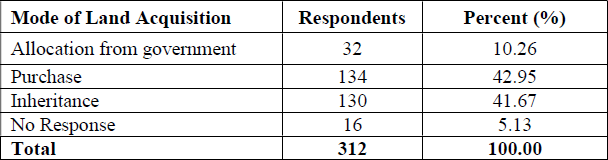
Existing Patterns of Land Ownership
The existing patterns of land ownership in Bamenda II Council as in most areas in Cameroon showed that 33.97% of lands owned are by simple conveyance deed or sales agreement, while 20.51% do not own any document at all.
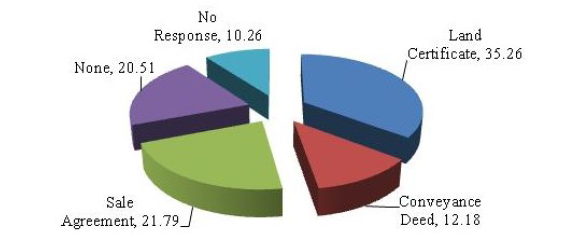
Type of documents owned by Landlords
Nowadays, citizens increasingly show lack of interest with respect to land titles and financial institutions have less confidence in them. The survey showed that only (35.26%) of the sampled households have land certificates and (34.00%) of the same sampled population do not know the procedure for obtaining land certificates.
This is largely because the principles of their intangibility, irrevocability and the definitive character are very much often violated. For instance, when several land titles are delivered on the same piece of land to different individuals, where land titles are arbitrarily delivered without respect to any legal proceedings at all or obtained by unorthodox means, where land titles are being established partially or wholly on a piece of land in a government reserved area or that of a public community etc, they can be declared null and void and the land title can be withdrawn.
Public institutions are allocated land for development by simple allocation procedure by the Land Consultative Board. More than 75% of public institutions lands do not equally have titles. This has led to:
- Government lands been used or transferred to individuals or groups without reserves for future use for example the part of the Bamenda GRA Layout which stretches to Ntambag.
- Most public facilities are found on land without formal land certificates;
- Absence of an up-to-date cadastral data base which continuously shows the changing pattern of land ownership;
- Artificial lands of the state (steep slopes, watercourses, swamps, escarpments) are not delimited and protected from invasion and occupation;
Categories of Land Uses in Bamenda II Council
The land use pattern in Bamenda II is unplanned and uncontrolled. It is evolving, flexible and determined by decisions of public authorities to locate public facilities and decisions of private entrepreneurs on where to do what. The dynamic process of land use
involves:
- Commercial and profitable activities invade residential activities;
- More profitable activities invade less profitable ones;
- Commercial and business activities push residential activities outwards as well as spread in a linear pattern along fast transit arteries (passages);
- The conversion of one land use to another is not subject to control and approval except for purposes of tax declaration.
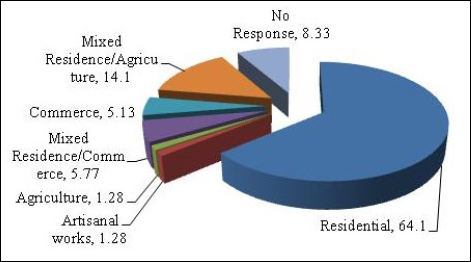
Categories of Land Uses in Bamenda
| # | Classification | Location | Characteristics | Observation |
| 1 | Residential | |||
| 1.1 | High income low density | - Ngomgham - Akokikang |
Large plots of 800 to 1000 square metres with occupation coefficient of 30 to 40 % |
Several plots still unbuilt |
| 1.2 | Medium income | - Ngomgham | Moderate size plots of 600 to 800 square metres with occupation coefficient of 40 to 60% |
|
| 1.3 | Low income high density |
- Ntambag, Atuazire, Ntarinkon, Ntamulung, Musang |
Small size plots of less than 600 occupation coefficient of more than 60% | Very densely settled and overcrowded |
| 2 | Commercial | |||
| Central Business District (CBD) |
Commercial Avenue and environs (Azire “A”and “B”, Lower Atu-Azire |
Wholesale, supermarkets, banks and financial houses, offices, catering services, repair services, information services, food market, retail services, etc. | Old residential buildings being converted into high rise commercial buildings | |
| Markets | Ntarinkon, Nitob, Ntaturu and Muwatsu |
Retail, foodstuff, services, lorry park | Residential buildings being converted into commercial use | |
| 3 | Industrial | |||
| Service Industries | Azire “B”, Dispersed across town |
Garages, saw mills, small scale soap and agro processing | Visual nuisance | |
| 4 | Administration | |||
| Regional and Divisional Offices | Ntambag, Mulang, Ntarinkon | Regional and Divisional Services | Others are dispersed across town | |
| Sub-divisional Offices | Ntambag, Mulang | Divisional office, sub-divisional and some divisional offices |
Others are dispersed across town | |
| Council Offices | Mbingfebieh and Mulang |
Bamenda II Council and Bamenda City Council | Mbingfebieh and Mulang council office has recently been developed |
|
| 5 | Open Spaces | |||
| Institutional | All over town | Premises of public offices, public and community facilities, municipal stadium |
No formal open spaces | |
| Farmlands | National lands, urban fringe | Seasonal crops and vegetables | No organised pattern | |
| Sporting arena, statia and playgrounds | Ntamulung, Atuazire, Azire “A”/Schools |
Parcour Vita, Municipal stadium/school pitches | No organised pattern, Inversion of private lands for sports |
|
| Public and Community Facilities | Across town | Educational, health, civic and welfares | Insufficient reserve lands for future development | |
| Mining Industry | ||||
| Stone and sand quarry | Ntambeng, Mbatu, Chomba | Stone and sand quarry | Hoarding for lands for stone quarry is high at Ntambeng; Polluted streams in Chomba and Mbatu due to artisanal sand exploitation | |
| Environment | ||||
| Flood plains | Mulang, Ngomgham, Mukwebu, Ntaturu, Alankie | Risky sites, swampy areas, escarpment | Urban agriculture and housing development in the wetlands and escarpment | |
| Escarpments and Steep slopes | Ntambag, Jangma, Azana, Atuafor |
Risky sites, swampy areas, escarpment | Urban agriculture and housing development in the wetlands and escarpment | |
| Forestry | ||||
| Forestry reserves | Mankon Palace, Chomba, Mbatu | Mankon Palace forest reserve, The forest in Chomba and Mbatu | Little efforts are being done in the re-aforestion of the community forest. |